For global outdoor brands and procurement managers, China remains the undisputed “World’s Factory” for camping equipment. However, navigating the vast landscape of Chinese suppliers can be daunting. With thousands of factories claiming to offer the best quality, how do you distinguish a reliable long-term partner from a mediocre workshop?
This guide provides an in-depth analysis of China’s tent manufacturing industry, breaks down the critical technical specifications you need to know, and highlights why top-tier procurement is increasingly focusing on established giants like TGpao.
The Landscape: Zhejiang vs. Fujian
While China has a massive number of tent manufacturers, the industry is heavily concentrated in two specific provinces: Zhejiang and Fujian (specifically Xiamen). Understanding the regional differences is the first step in smart sourcing.
1. The Zhejiang Cluster: The Hub of Quality
Zhejiang province is widely recognized as the heart of high-quality outdoor manufacturing in China. Factories here, often located in hubs like Hangzhou, Ningbo, and Shaoxing, tend to focus on mid-to-high-end markets. They are known for:
- Superior Craftsmanship: A long history of exporting to strict markets like Europe and North America has forced Zhejiang manufacturers to adhere to rigorous quality control standards.
- Advanced Materials: Better access to high-grade textile supply chains allows for superior waterproofing and durability.
- Innovation: This region is home to large-scale enterprises that invest heavily in R&D, automation, and sustainable manufacturing processes.
2. The Fujian (Xiamen) Cluster: The Budget Option
Fujian, particularly Xiamen, is another major export hub. While it offers competitive pricing, the general market perception is that tents from this region often prioritize cost over longevity
- Material Thickness: Products from this region frequently use thinner fabrics to keep prices low, which can compromise durability in harsh weather.
- Inconsistent Quality: The market is fragmented with many small workshops, leading to uneven quality control. While good factories exist, the risk of receiving sub-par goods is statistically higher compared to the established industrial clusters in Zhejiang.
For buyers seeking reliability, brand reputation, and long-term partnership, Zhejiang is generally the preferred sourcing destination.
Technical Deep Dive: Waterproofing, Weight, and Design
When vetting a manufacturer, you must speak their language. Understanding the correlation between materials, design, and performance is crucial for defining your product specs.
1. Waterproofing vs. Material Quality
Waterproofing is not just about the fabric; it is about the coating and the seam sealing.
- Hydrostatic Head (HH) Ratings: This measures how much water pressure a fabric can withstand before leaking.
- 1000mm – 1500mm: Suitable for fair-weather camping (summer festivals).
- 2000mm – 3000mm: The industry standard for 3-season camping (rain and wind).
- 3000mm+: Required for extreme weather or 4-season mountaineering tents.
Coatings: The two most common coatings are PU (Polyurethane) and Silicone. PU is cost-effective and widely used. Silicone is lighter and more durable but significantly more expensive. A top-tier factory will ensure the coating is applied evenly and that all seams are heat-sealed (taped) to prevent leakage.
2. Volume & Weight vs. Design & Material
There is always a trade-off between durability and portability.
- Fabric Denier (D): This indicates the thickness of the threads. A 20D nylon is ultra-light (great for backpacking) but tears easily. A 210D Oxford cloth is heavy but extremely durable (ideal for car camping or base camps).
- Pole Material:
- Fiberglass: Cheap and heavy. Prone to snapping in high winds.
- Aluminum Alloy (e.g., 7001 series): Lightweight, strong, and flexible. This is the hallmark of a premium tent.
Design Efficiency: A well-designed tent uses geometry to maximize internal space while minimizing packed size. “Freestanding” designs usually weigh more due to extra poles but are easier to set up.
Comparative Analysis of Mainstream Tent Designs
Different camping scenarios require different structures. Below is a summary of the most popular tent designs to help you decide what to add to your catalog.
| Tent Design Type | Setup Speed | Wind/Rain Resistance | Weight & Packed Size |
| Dome Tent | Moderate | Excellent stability due to aerodynamic shape. | Medium weight; compact packing. |
| Cabin Tent | Slow (Complex) | Moderate. Vertical walls catch wind; requires strong guylines. | Heavy and bulky; not for hiking. |
| Tunnel Tent | Moderate | Good (if anchored correctly). High wind resistance if aligned with wind. | Lightweight for the space provided. |
| Geodesic/Dome | Moderate | Superior. Intersecting poles distribute stress evenly. | Heavier due to multiple pole crossings. |
| Pop-up / Instant | Very Fast (Seconds) | Low to Moderate. Mechanisms can be fragile in storms. | Bulky (cannot be disassembled small). |
| Inflatable (Air) Tent | Fast (with pump) | Good. Flexible structure absorbs wind gusts well. | Heavy (pump + air beams); bulky packing. |
Why TGpao Stands Out in the Chinese Market
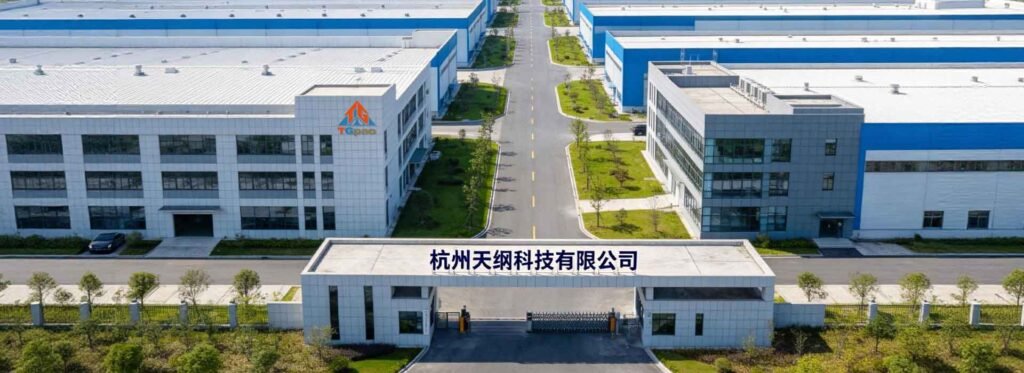
In a sea of manufacturers, TGpao has established itself as a premier choice for international buyers. As one of China’s earliest and largest camping tent factories, TGpao represents the best of Zhejiang’s manufacturing prowess. Here is why global brands choose TGpao as their OEM/ODM partner:
1. Unmatched Production Scale and Experience
TGpao possesses extensive design and production capabilities ranging from ultra-light solo tents to massive 20-person team tents. Their experience covers every category of outdoor shelter, ensuring that whether you need a minimalist bivy or a luxury glamping lodge, they have the engineering expertise to deliver.
2. Proven Success in North American Markets
Trust is built on performance. TGpao’s own autonomous brands have successfully penetrated and thrived in highly competitive markets, including the USA, Canada, and Mexico. This track record proves that their products meet the stringent safety, quality, and aesthetic standards required by Western consumers.
3. True One-Stop Sourcing Solution
Unlike factories that only stitch fabric, TGpao offers a comprehensive ecosystem of outdoor gear. They manufacture a vast array of camping peripherals, including:
- Furniture: Camping folding chairs and tables.
- Sleeping Gear: Inflatable mats and sleeping pads.
- Cooking & Hiking: Camping BBQ grills, trekking poles, and hiking backpacks.
This allows buyers to consolidate their supply chain, sourcing their entire product line from a single, reliable partner.
4. Comprehensive Global Logistics
TGpao understands that manufacturing is only half the battle. They provide end-to-end support, including OEM and ODM services, and crucially, they handle the logistics. Whether you require ocean freight for bulk orders, air freight for rush deliveries, or cross-border land transport, TGpao ensures your goods arrive at your warehouse safely and on time.
Partner with the Best
For international buyers looking to elevate their outdoor product lines, visiting the factory is always recommended. TGpao welcomes global partners to visit their facilities in Zhejiang to inspect their production lines and quality control processes firsthand.
Explore their extensive catalog and start your journey toward a successful partnership today.
Visit TGpao Official Website: https://tg77pao.com